Pukekohe plans taking shape as ATR weighs wider picture
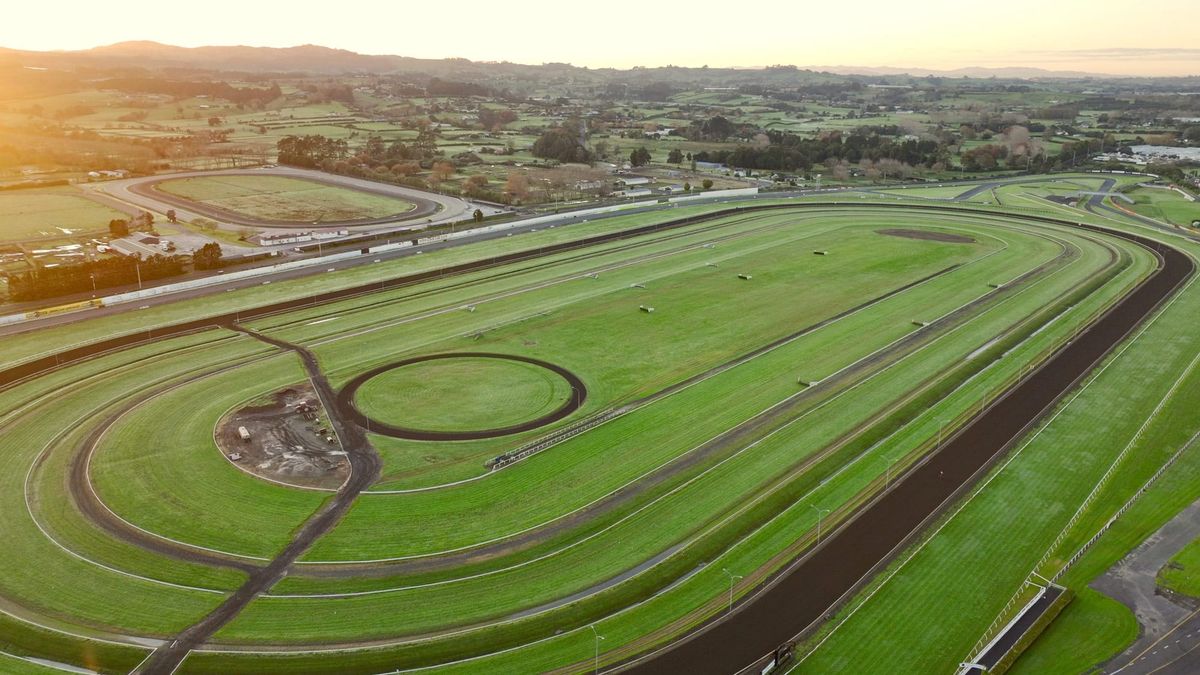
Construction of a dedicated trials course is well underway at Pukekohe, but Auckland Thoroughbred Racing (ATR) is keeping its options open on further development of the venue as several major pieces of the upper North Island racing landscape continue to take shape.
The number one grass at Pukekohe is being upgraded to become a dedicated trials facility, while ATR is also progressing an application with Auckland Council to rezone part of its landholding to enable residential development.
Further expansion of training infrastructure, including additional stabling, remains a possibility at Pukekohe, but ATR chief executive Paul Wilcox said the club was conscious of making major investment decisions while other significant projects remained unresolved.
Among those is Waikato Thoroughbred Racing’s proposed Greenfields development near Tamahere, which has been designed as a major racing and training centre with the potential to accommodate a significant population of horses in training.
The scale of that proposal could have an obvious bearing on the future demand for training infrastructure elsewhere in the upper North Island, including Pukekohe.
“We are assessing lots of different things at the moment, but we don’t want to put the cart before the horse,” Wilcox said.
“There’s all the other things happening in the industry, such as with the Waikato greenfields project, and we’ve got to make sure that what we do aligns with that.
“We’re focusing on what we can do, and that’s the number one grass at this stage.”
Plans to increase the horse population at Pukekohe, including the potential development of additional stabling, were among the reasons motorsport activities ceased at the venue in 2022.
At the time, ATR indicated that the long-term development of Pukekohe as a racing and training venue was incompatible with the continued use of the circuit for motorsport.
While those longer-term decisions remain under consideration, work on the number one grass is already progressing.
The intention is for the track to be used exclusively for trials, reducing the reliance on the course proper and giving trainers another option, particularly during wetter periods.
Industry participants and senior jockeys have inspected the developing surface and given their approval for work to continue.
“We want this so it adds another facility for trialling that isn’t interrupting or utilising the course proper,” Wilcox said.
“That can be fraught at this time of year when you’ve got a bit of rain around.”
The development comes as Pukekohe continues to play an increasingly important role within ATR alongside Ellerslie, particularly as a racing, training and trialling venue.
Another potentially significant piece of the Pukekohe puzzle is ATR’s application to Auckland Council to change the zoning of part of its landholding to allow residential development.
Wilcox said ATR was working through the consenting process, with proceeds from any eventual development intended to help fund infrastructure while also strengthening the club’s prizemoney investment fund.
“That’s the logical step, it’s to build that investment fund so we have a recurring income and that it diversifies our income opportunity,” he said.
“So far the fund is working well. This year we’re putting $5 million into stakes across Pukekohe and Ellerslie. That’s what we want to keep on continuing to grow, while making it sustainable.”
The investment fund was established as part of ATR’s strategy to use the value of its property assets to create recurring income rather than relying solely on the proceeds of land sales.
At the same time as decisions are being considered over Pukekohe’s future, ATR is in discussions with Whangarei Racing Club over another potentially significant change to the northern racing landscape.
The two clubs have signed a Memorandum of Understanding, allowing their respective boards and management teams to explore what an amalgamation could look like.
No final decision has been made and, should the two organisations agree on a proposal, it would need to be put before the memberships of both clubs for approval.
Wilcox said one of the clearest potential benefits was the ability to reduce duplicated administration, pointing to efficiencies achieved through the previous merger of the Auckland Racing Club and Counties Racing Club to form ATR.
“The obvious benefit is the removal of duplication of costs from administering clubs, where we can do a lot of back office stuff that removes that cost from Ruakaka, which is one of the big benefits out of the merger between Ellerslie and Pukekohe,” Wilcox said.
“It obviously benefits the industry if we can do that.”
The discussions inevitably raise questions over what a merged organisation could mean for the future roles of Ellerslie, Pukekohe and Ruakaka, but Wilcox said it was too early to draw any conclusions.
“Again, we don’t want to put the cart before the horse. That’s part of the discussions between the respective boards that are being done now,” he said.
“First and foremost, it’s about getting the merger right and presenting it to our members, and what takes place from there is what will unfold as per those discussions.”
There is currently no set timetable for the amalgamation discussions.
In the meantime, ATR is preparing for a busy period of spring racing, with Ellerslie meetings scheduled for October 17 and 24 and Melbourne Cup Day, while Pukekohe will host racing on October 28.
Wilcox said the performance of the reconstructed Ellerslie track had given ATR considerable confidence after its first couple of years in operation.
“We’ve had some race meetings where there was a large volume of rainfall, and to then get a Soft 5 track has been outstanding,” he said.
“It gives trainers and owners a more confident view that they’re going to be racing on a good surface.”