Vale Bruce Craik
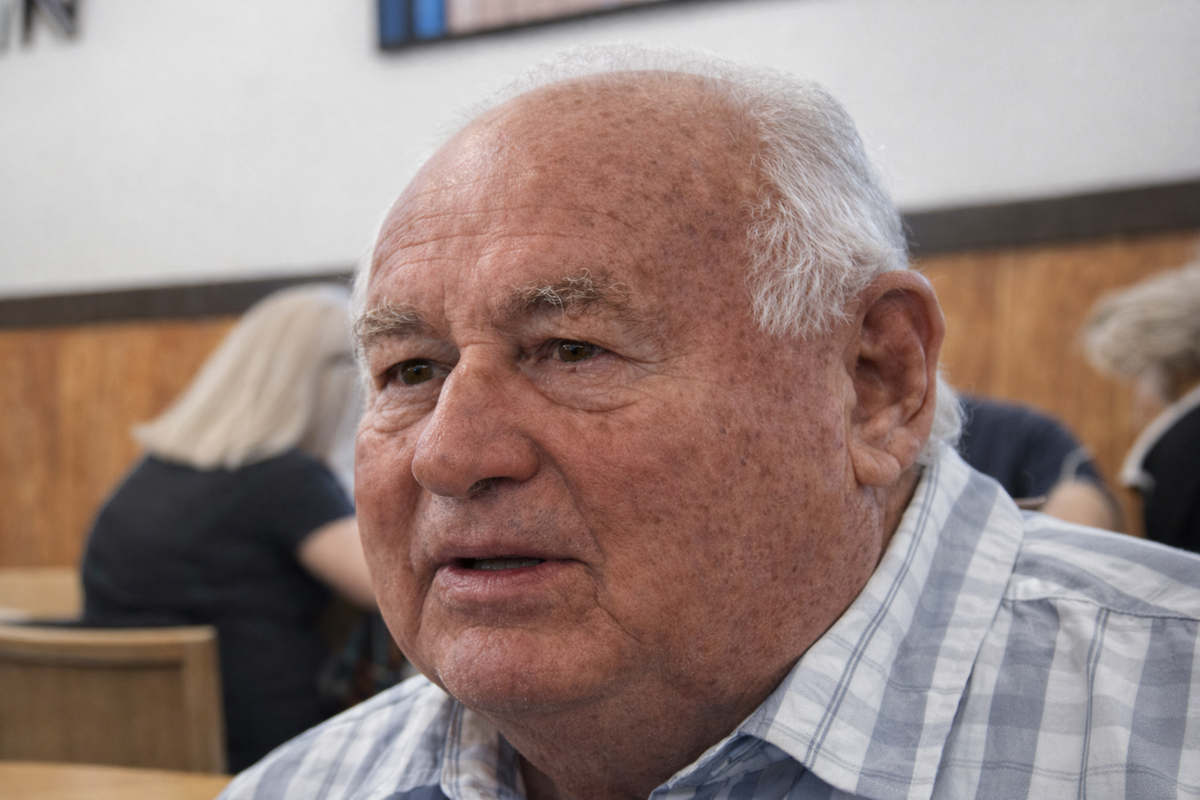
Integrity, loyalty, industry, honesty-most of all, empathy. Those are words mentioned most often at the farewell to former stipendiary steward Bruce Craik at Riccarton Park.
Bruce, one of the finest people I have met in racing – which is saying a good deal – has passed on at 88 after a full happy and healthy life, devoted first to Norah and family and for so long to horse racing from days as an apprentice jockey.
Bruce had form in the game. His grandmother, Caroline Cotton, was a sister to several prominent trainers and jockeys early last century, being active in several parts of New Zealand in both codes, branching out from what was Bruce’s home base near Forbury. Wellington and Dunedin Cups were among the family trophies. Her nephew Vic Cotton was a champion apprentice and the first of those to ride short in the modern style. He was retained by New Zealand racing czar, Sir George Clifford, but suffered from ill health and was a victim of the influenza epidemic of 1918.
“The family went to the races and talked about horses a lot. They used to say I should be a jockey,” Craik would say. “One day I was walking around the track when a lady stopped me and asked if I wanted to be one, I said I wouldn’t mind and she said she knew a trainer who might be interested. That is where it started.”
The good news was that it wasn’t just any trainer, it was Wally McEwan, who firstly trained at Wingatui and later at Hawera.
“The best boss I ever had. The best boss anyone could have had,” Bruce would say.
The best testimonial to the McEwan system was that his leading apprentice, Noel McCutcheon, crisp to the point of ruthlessness with wrongdoers and a master race reader, became the Chief Stipendiary Steward of New Zealand – and possibly the best of all of them – while Bruce Craik, off the track as on, was behind but not by much. In fact, had he accepted an offer to move to Auckland he may well have been Noel’s successor. At that stage of his career he chose family and Christchurch first and never regretted it.
Bruce’s first winner, Strathcarron, at Cromwell in 1954, dislodged his young rider after the post and he was unable to weigh in, being on his way to hospital instead of cheers from the crowd. When McEwan, who had been training the high-class stayer, Lancaster, and later would have Fury’s Order and Nordic Star, decided to move north, Bruce was asked to go too. He rode successfully there before weight and other considerations meant a return to Mosgiel.
A good measure of his skill beside some feature handicap winners was his popularity as a trackwork rider at Wingatui, handling top horses in a morning for a variety of trainers with his usual work ethic. He was described as “the very promising apprentice” when deciding to go north.
Then he became a “lineman for the county” – on the telephone team for the Post Office under the captaincy of later Post Office national chief and Racing Authority member, Syd Bradley. For many years they travelled all over the province to install phones and fix problems.
It used to be a standing pub joke among his friends wanting to know what Bruce might have been offered by the rural lady of the house in exchange for an upgraded (coloured) phone - a prestige item in those days. A joke because of the loyalty Bruce always had for those close to him meant it was never more than that.
Bruce became an assistant steward under Jock McCulloch in Otago for several years before being offered the senior position in Canterbury in 1980 following Les Muirhead. It was a compliment that he measured up to the Muirhead standard if in a different way.
Because of his past he had a soft spot for apprentices and the challenges they faced as largely unsophisticated teenagers mixing in a hard racing world, much as he had had to do.
Two achievements were helping introduce apprentice claims to two-year-old races over strong opposition from trainers and, when appointed chairman of the National Apprenticeship Board, he pioneered residential courses for apprentices spread over several weeks. It was a major undertaking and while it became impractical eventually it helped several outstanding riders, Kylie Williams being an example in Canterbury.
When Jacqui Jamieson was paralysed in a race fall (1992) he played a prominent role “behind the scenes” with Riccarton chief executive, Dave Lloyd, in raising over $10,000 in cash in a single day at Riccarton. One of the many generous donations of time given to the less fortunate. There were countless others. Fame was of no interest to Bruce Craik, but other people’s ill fortune was a beacon.
Bruce liked to use the phrase “behind the scenes” in which he tried to influence change and he had more than his share. But he saw life in simple terms and found the politics of national administration a cause of frustration. Eventually he was rather disillusioned by the battle.
Not all of his decisions were popular, as would be expected, but they were always based on common sense over precedent. The spirit of the rules as well as the words. He liked to win and seemed an unofficial Board member of his much favoured (like, most days) Hornby Club surroundings, loving the company, the raffles, and the sports comps along with Norah; directing opinion but without standing for office.
Bruce was a sympathetic steward but no walkover. Integrity ruled over favouritism. For example, he never hid his admiration for the riding of Chris Johnson and followed his fortunes closely in retirement, yet the pair clashed in the judicial room on many occasions and more than once Bruce laid serious charges against Chris. There was respect on both sides though. When Johnson started winning races very wide out at Riccarton in the wet it promoted a club crisis and ultimately an outside rail to prevent it.
Bruce was the centre of two bitter Guineas decisions involving Overwhelmed and Burletta but his judgement was upheld at several appeals. He spent some time working in Australia on exchange and admired the Australian judicial system while finding some Judicial committees of amateur stewards here sometimes frustrating even after “behind the scenes” chats about cases.
Bruce’s strong community ties were based in the New Zealand of the 1950’s and 1960’s when money was tight and “mate’s groups” were formed to do work – otherwise unaffordable – at weekends and for friends in need then socialise afterward. It was an honour system rare today. Legions of people could tell of his later voluntary aid and support over many years all done in the spirit of community and not always expected from a hardened racing administrator. And rarely mentioned by “behind the scenes” B Craik.
The generous offer did not always turn out right. On a Central Otago circuit while keeping an eye on the goings on before the second day – he religiously walked tracks before and on raceday and usually more than once – he offered to help a prominent trainer feed up. The offer was appreciated but a problem arose when the horse returned a positive swab. The mention that the horse had been last fed by a stipendiary steward presented some problems for the authorities.
In his younger days Bruce had been a fine sportsman at rugby and cricket, close to representative class in the latter. While lacking the stature for the game he was also an outstanding basketballer.
In 1989, in his fifties, he was a driving force and member of the “New Zealand” Stewards XI (Canterbury officials with some highly suspect ring-ins filling out the lower order) which played a “test” against the Queensland Stewards XI in Brisbane. Bruce led a spirited if uneven haka before the game; gave a stern team talk between innings to firm up wilting backs, and didn’t allow a single bye in the innings as wicketkeeper, being voted “man of the match”.
The haka was actually the highlight for the Kiwis who not only ran a moderate second but found that the Canterbury Draught they had taken all the way there was spurned without trial by most of the Queenslanders and they were left to drink it themselves. They had rather hoped it had been the other way around. Bruce was a keen participant in many such local social racing matches playing for keeps but always in a sporting way.
So the last race has been run, the last favour given, the last social group adjourned. Good men don’t necessarily die young, but they are always fondly remembered. There will be many long and living memories of James Bruce Craik.
A celebration of Bruce's life was held at Riccarton Park last week. - Dave McCarthy