How Cosmic Crusader found his palate for racing
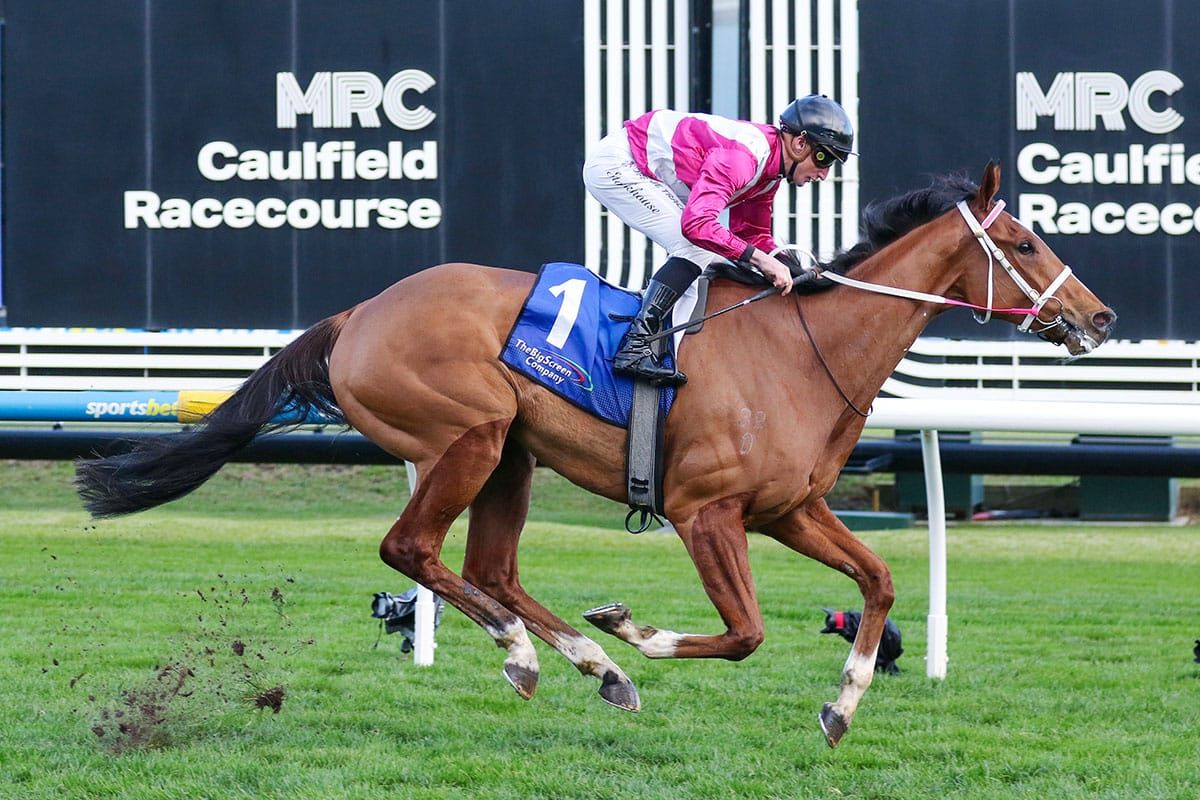
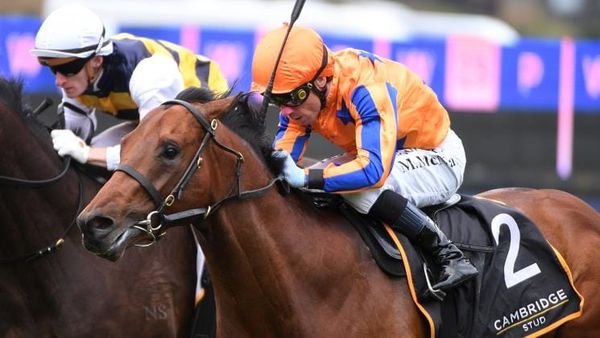
Cosmic Crusader (NZ) (Maurice) revealed himself as a genuine spring contender in last Saturday’s Group 3 Bletchingly Stakes at Caulfield.
The horse from Perth carries with him a fine pedigree and a still untapped racing potential but, ultimately, it might not be merely his racing deeds that will be his longest-lasting legacy in horse racing.
Cosmic Crusader’s journey through the upcoming Melbourne spring carnival to his main aim of the Cox Plate has been made possible due at least partly to a revolutionary form of soft palate throat surgery called the Ahern Procedure, named after the method’s creator Dr Tom Ahern.
The Perth-based Ahern has long been the veterinarian for horses owned and bred by Perth’s most powerful racing figure Bob Peters and he credits Peters Investments as being integral in the development of the ground-breaking procedure over the years.
He said Peters’ desire for his horses to be happy and content with their racing lot helped expediate the form of throat surgery.
Ahern said that after years of working with racehorses, he came to the conclusion that horses who were nervous or upset on race day often had breathing problems or were beginning to show such symptoms.
He said the procedure’s new banner horse Cosmic Crusader was developing the symptoms when going through a flat period in his career as a three-year-old.
He won just one race – a lowly BM60 – from seven starts at that age before he went in for surgery.
Ahern said Cosmic Crusader was over-racing, not finishing his races off and would pull up with an elevated heart-rate and would blow heavily after galloping.
Post-surgery, a much more relaxed Cosmic Crusader has won seven of his 10 starts, including the G1 Northerly Stakes (1800m) in Perth last summer and now a Bletchingly Stakes in Melbourne.
That win has put him on the path to G1 races like the Memsie Stakes (1400m), Makybe Diva Stakes (1600m) and possibly Might And Power Stakes (2000m) on his way to competing in the Cox Plate.
Ahern said the surgery was difficult to perform, but he has released a paper on the method called the step-by-step guide to ‘Performing a Tension Palatoplasty’.
He explained how horses can develop soft palate throat issues: "A horse is an obligate nasal breather, meaning they are designed to only breathe through their nose, as they need to be able to eat and run if suddenly confronted with a predator," Ahern said.
"However, if for whatever reason the horse feels that this nasal supply is inadequate, then it can cheat by sneaking some emergency air through its mouth.
"When a horse is galloping, their soft palate should sit on the tongue and this contact between the tongue and the soft palate creates a seal, referred to as the oropharyngeal seal.
"This seal prevents the horse from taking air through its mouth and the palate moving up and narrowing the airway, which can then result in the palate displacing.
"So, if for whatever reason they don’t feel their air supply is adequate, they can cheat by flattening their tongue and breaking the seal to enable them to breathe through their mouth.
"The epiglottis is then the only thing left holding the palate in place but, if it is very small or weak, the palate will displace and a gurgling sound may be heard."
Peters said he had been pleased with the results of Ahern’s surgery.
"It’s a plastic surgery of the soft palate," Peters said. "It tightens the palate… like a facelift tightens your face.
"Horses with these breathing problems can get very agitated and upset at the races. We want our horses to enjoy their racing. And a happy horse will always perform better than one that is not."