West Coast gone but never forgotten
by Michael Guerin
One of my favourite horses died on Saturday.
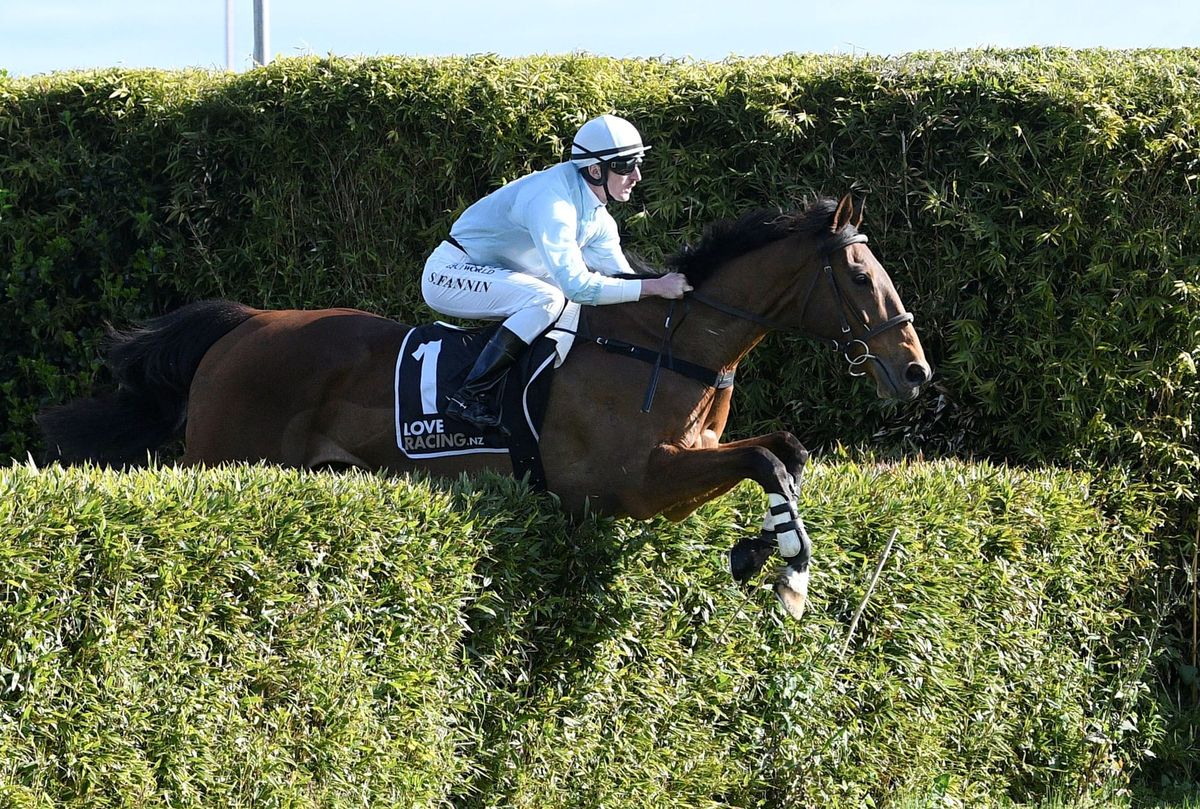
His name was West Coast. He was New Zealand’s best steeplechaser, one of the best to ever jump raceday fences.
He was a champion of his kind.
West Coast was humanely put down after fracturing his shoulder in the Waikato Steeples at Te Rapa.
He jumped hundreds and hundreds of fences in his life and this time he landed awkwardly and one bone, one joint in his big strong body was pushed or bent the wrong way.
Something broke.
A few minutes later West Coast was dead, put to sleep to spare him pain, at the very track where he won two Great Northern Steeplechases, the same track he won his last start before Saturday just a few weeks ago.
West Coast will now never leave the scene of arguably his greatest triumph. His trainer Mark Oulaghan left though.
Oulaghan left Te Rapa on Saturday with an empty berth in his horse float where hours earlier a legend had stood.
For horse trainers that is their second worst nightmare, taking a horse to the races who never comes home.
The only worse tragedy, of course, is the loss of human life in racing, or any sport.
About the only mercy out of this West Coast sadness is that jockey Joshua Parker was not seriously hurt.
But our best jumps horse, the poster boy for the struggling code which just two years ago faced extinction, is now gone.
There will now be those who want to make West Coast a different type of poster boy.
Some people in racing don’t like jumps racing, more for economic reasons, and those who are anti-racing can really hate jumps racing.
It is an easy target, after all, sometimes race horses die.
That, very conveniently, ignores the simple fact of life that humans die participating in their chosen sports all the time.
Not just the risky stuff like combat sports or motor racing but normal people die doing everything from running marathons to playing social rugby or even first-class cricket.
Heartbreakingly in those cases, too, something breaks and those athletes never go home either. Like West Coast.
The difference, some will tell you, is choice and free will.
Humans choose to participate in a sport whereas horses are made to participate.
I liked West Coast the horse the first time I heard his name because I am from the West Coast and we coasters don’t get much named after our home these days.
As I followed his career, I grew to love him.
Not because he was fast, because he wasn’t.
Because he was brave. Because, as much as I could tell, he loved racing and winning.
But what would I know. I watched from afar. I didn’t really know West Coast.
I didn’t pat him, feed him, hug him, own him and I honestly can’t remember ever backing him.
But Mark Oulaghan knew West Coast.
He spent years with him, often travelling just the two of them together.
A man and his mate, like you and your dog, if your dog weighed 550kg.
“He was a lovely big kind horse,” Oulaghan said of his three-time Grand National winner.
“He was very placid and would always try to please you.”
So how does Oulaghan feel knowing his mate, his family pet, died on a racetrack when he could have spent the next 20 years eating grass and getting fat in a paddock?
A man of few words, he thinks, then answers.
“It is part of racing and I know it is not a great look for jumps racing because he was such a great horse.
“But he loved it. He loved racing and I really think he loved winning.
“He liked being better at it than the other horses.”
As Oulaghan quietly, softly says those words something dawns on me.
It is 11.30am in London where I am, meaning it is 10.30pm in New Zealand.
Thoroughbred horse trainers are only ever awake that late if they are celebrating and Mark Oulaghan has nothing to celebrate.
I apologise to him for having rung so late at the end of a dark day.
“It is okay. I was just sitting here,” Oulaghan says.
“I don’t think I will be getting much sleep tonight.”
As for West Coast, he will never wake up.
But, like very, very few of us, he will never be forgotten.